A Case For Boredom
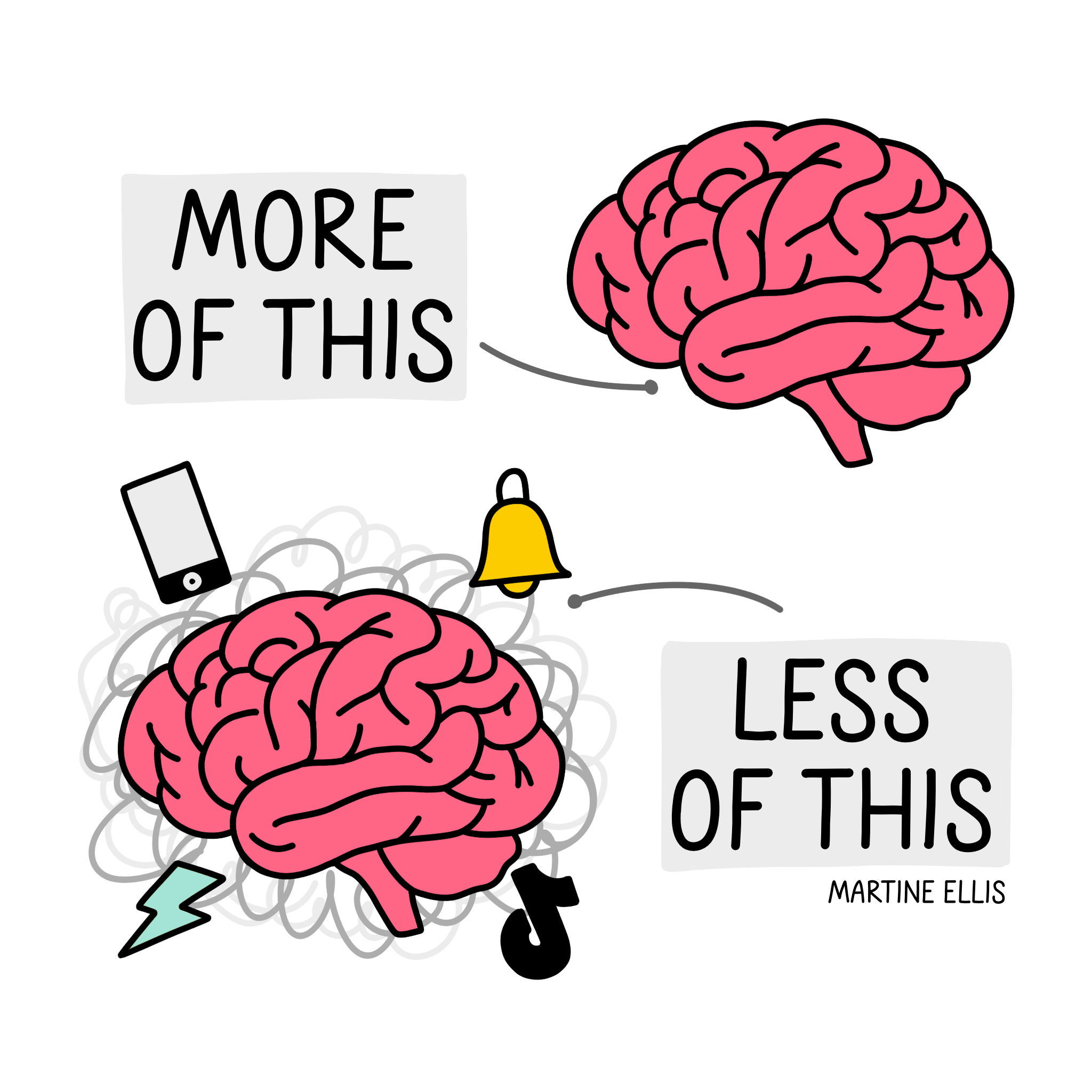
Humans hate being bored. It feels like wasted time. When a gap appears in our day, the natural reflex is to reach for our phones. We want to fill that space with "something", so we check social media or email for the tenth time because (a) we want the dopamine hit, and (b) sitting with our own thoughts can feel uncomfortable or even stressful.
The problem with this habit is that it blocks our best thinking.
When we allow ourselves to get bored, our brain enters a state known as the Default Mode Network. This is the part of the brain responsible for reflection, creative problem-solving, and making sense of complex situations. By filling every spare second with digital noise, we deny ourselves the opportunity to process information.
We need to be bored, or at least very close to it, sometimes.
I find the idea of total boredom—sitting still and doing nothing—mildly terrifying. For many of us, total stillness feels like a withdrawal from the stimulation we are used to. But I am not convinced that something akin to meditation is the only way to access our Default Mode Network.
Instead, I opt for low-stimulation activities. These are tasks that keep your hands or body moving just enough to satisfy the need for activity, but not so much that they require your full attention.
The key is to manage your cognitive load by avoiding "stacking" inputs. A gentle walk is a low-stimulation activity, but adding an audiobook turns it into a consumption task that occupies your working memory. Knitting is another personal favourite, provided it involves a simple, repetitive pattern. If I add a podcast or try to follow a complex chart, the task becomes high-stimulation again. You need the activity to be simple enough that your mind can wander.
You do not need to find more time in your schedule to make this work. It is about changing how you use the gaps you already have. We all have moments of transition: waiting for a kettle to boil or sitting on a bus.
Try reclaiming one of these moments today. You might find that the solution to a problem you have been stuck on appears exactly when you stop looking for it.
