
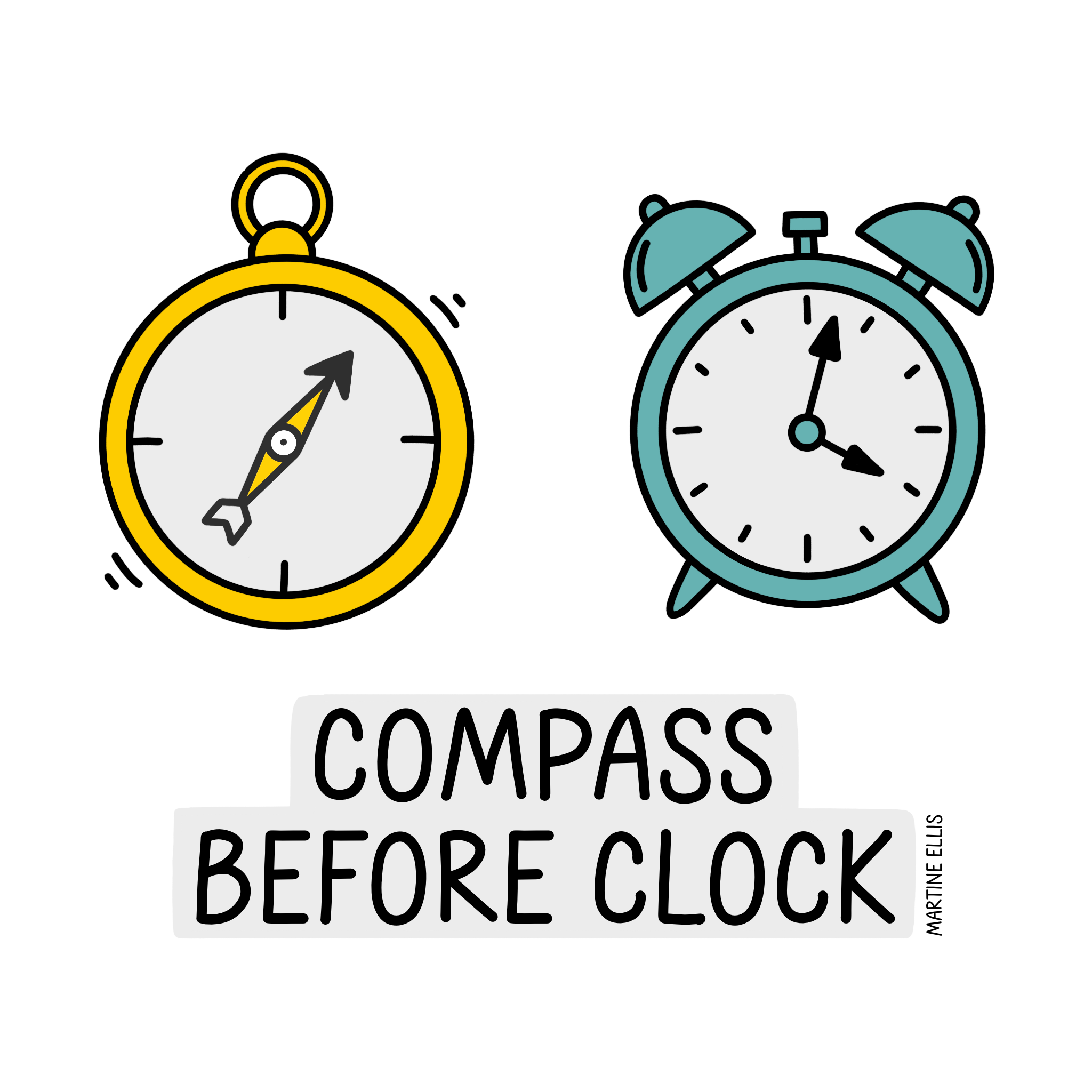
Stephen Covey's metaphor of the clock and the compass might have come from the era of Filofaxes and shoulder-padded power suits (I owned both), but his message is more relevant now than ever.
Covey encourages us to "live by the compass, not the clock". But what does he mean?
The clock represents your time, for example, your meetings, overall schedule, and daily tasks. The clock is loud, and it demands your attention every time a notification pings.
The compass represents your direction. It reflects your values and your intentions. The compass is quiet. It does not ping. It simply sits there, waiting for you to check if you are still heading the right way.
We have become exceptionally good at focusing on the clock. We use complex apps to shave seconds off tasks and find optimised routes through our to-do lists. But being efficient is useless if you are heading in the wrong direction. Moving quickly toward the wrong goal is a direct path to burnout.
This applies to both our personal and professional lives, though the way we use the compass differs.
In your personal life, you own the compass and decide on your destination (perhaps in partnership with your closest family).
At work, the direction is often set by others, such as leadership or organisational goals. However, the compass is still your tool for alignment. You need to know which direction that is, so you can ensure your daily "clock" activities actually contribute to it. If the clock says you are busy, but the compass shows you are drifting away from the core objective, something needs to change.
Think of the compass as a form of quiet technology. Unlike a GPS that barks instructions to recalculate, a compass requires you to pause. It asks you to be intentional before you become busy.
Before you plan your day today or tomorrow, take a moment to check your compass.
